Welcome to the Guardian Study Tools Page:
Access training videos, case studies, downloadable resources, practice assessments, and safeguarding guidance to support your learning and certification journey.
PSIS Guardian Study Tools
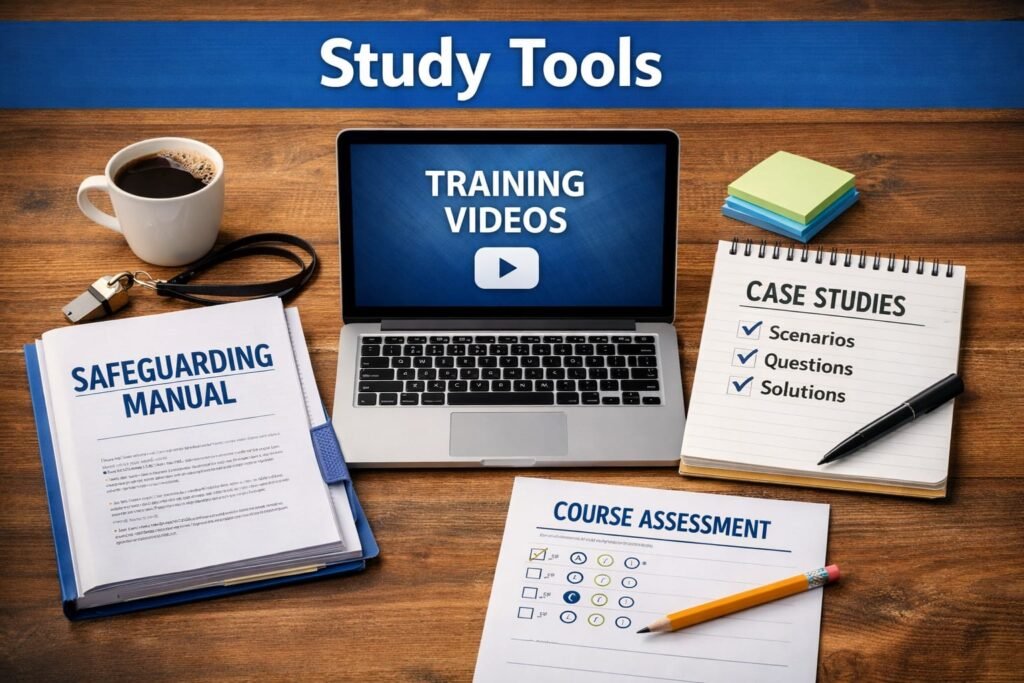
The PSIS Guardian Portal provides learning materials to support safeguarding education and responsible leadership.
Participants can access manuals, training videos and case studies to strengthen their understanding of safeguarding principles before completing the course assessment.
Learning Material:
Learning Manual, Training Videos, Case Studies, Final Assessment,
Participants can download the safeguarding learning manual to study the core principles of protection, security, integrity and safeguarding in sport and youth activities.
Module 1: Section A -PSIS Guardian Safeguarding Awareness Manual for Sport
Module 1 :Section B :PSIS Guardian Children & Vulnerable Adults
Module 2 :section A-HARASSMENT
Module 2: Section B-ABUSE
Module 2: Section C-POOR PRACTICE
Module 2 :Section D-SPECIFIC FORMS AND SETTINGS OF ABUSE
Module 2: Section E- EFFECTS OF HARASSMENT,ABUSE AND POOR PRACTICE
Module 2: Section F- BULLYING
Module 2: Section G- GROOMING
Module 2: Section H- HUMAN TRAFFICKING
Module 3: Section A-WHO HARMS CHILDREN
Module 3 :Section B-RECOGNISING THE SIGNS OF ABUSE
Module 4 :Section A-DEALING WITH A DISCLOSURE
Module 4: Section B-REPORTING AND RECORDING SAFEGUARDING CONCERNS
Module 5: Section A–CONFIDENTIALITY AND INFORMATION SHARING
Module 5: Section B- PROFESSIONAL BOUNDARIES AND CODE OF CONDUCT
Module 6: LEGAL RESPONSABILITIES IN SAFEGUARDING
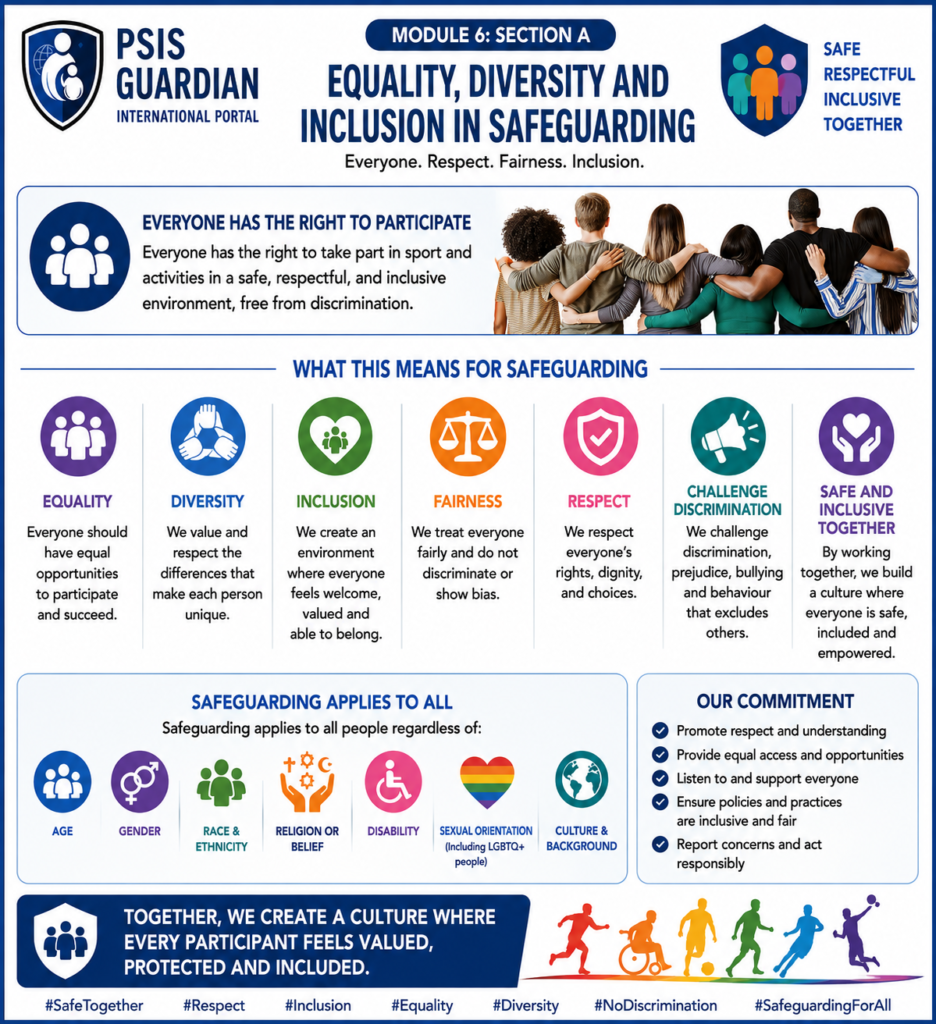
Module :6 Section A -EQUALITY,DIVERSITY AND INCLUSION IN SAFEGAURDING
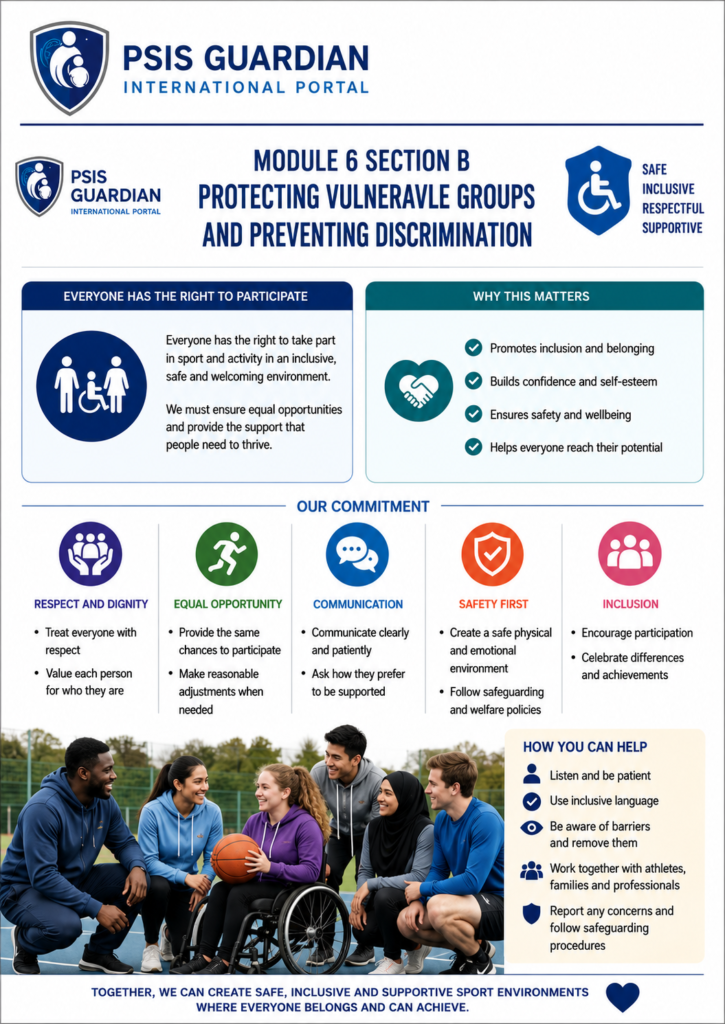
Module :6 Section B–PROTECTING VULNERAVLE GROUPS AND PREVENTING DISCRIMINATION
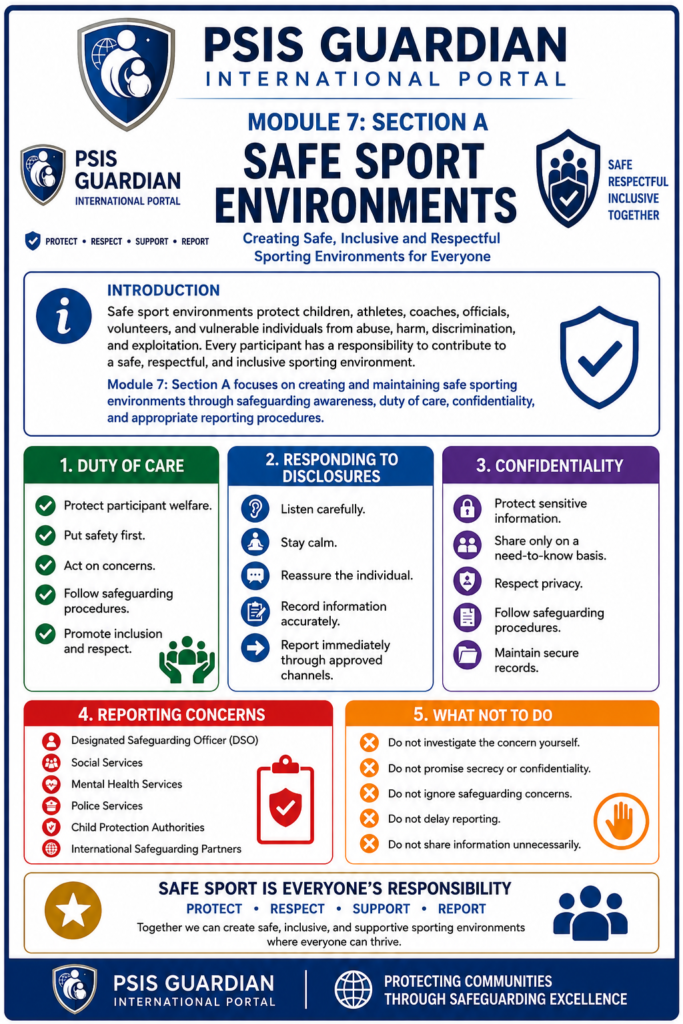
Module :7 Section A -SAFE SPORT ENVRONMENTS
Module :7 Section B- THE DUTY OF CARE
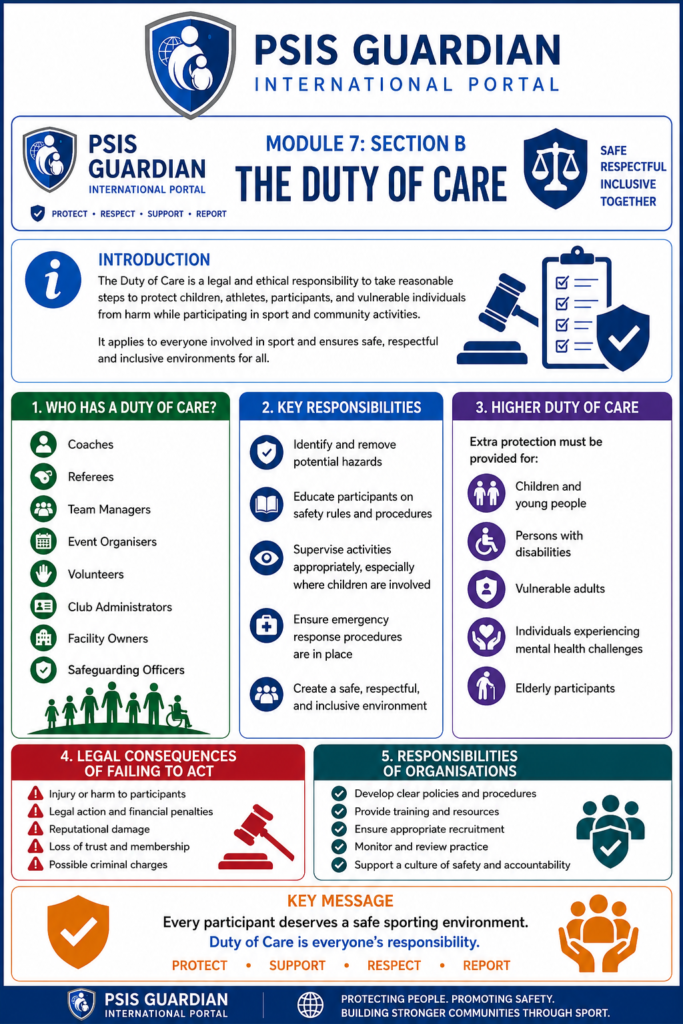
Module :7 Section C- RULE OF TWO
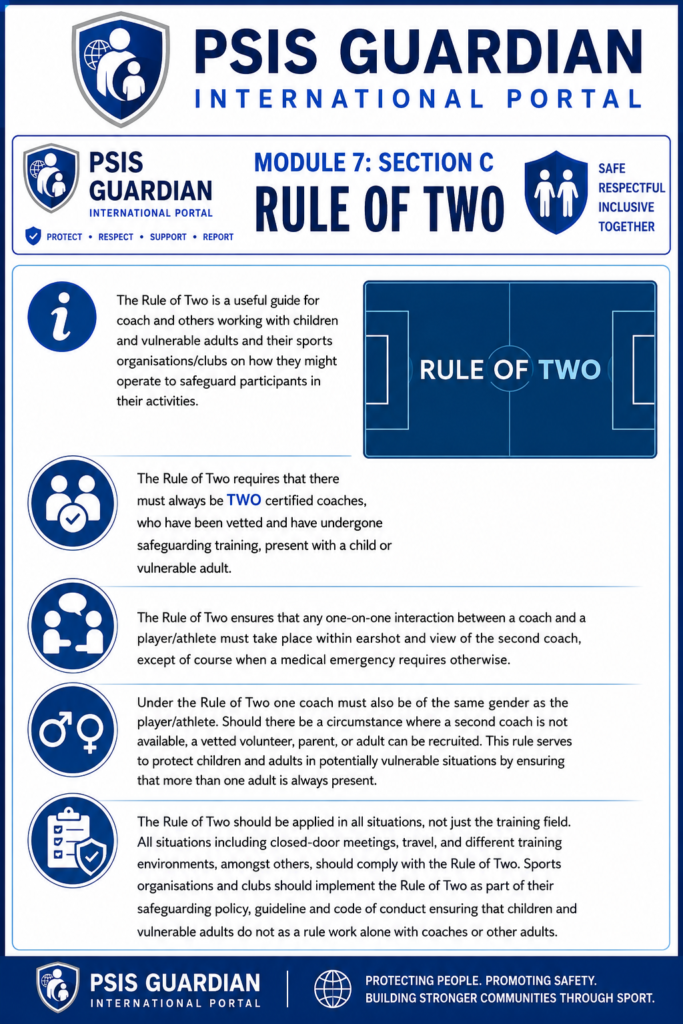
Module :7 Section D- PHYSICAL CONTACT
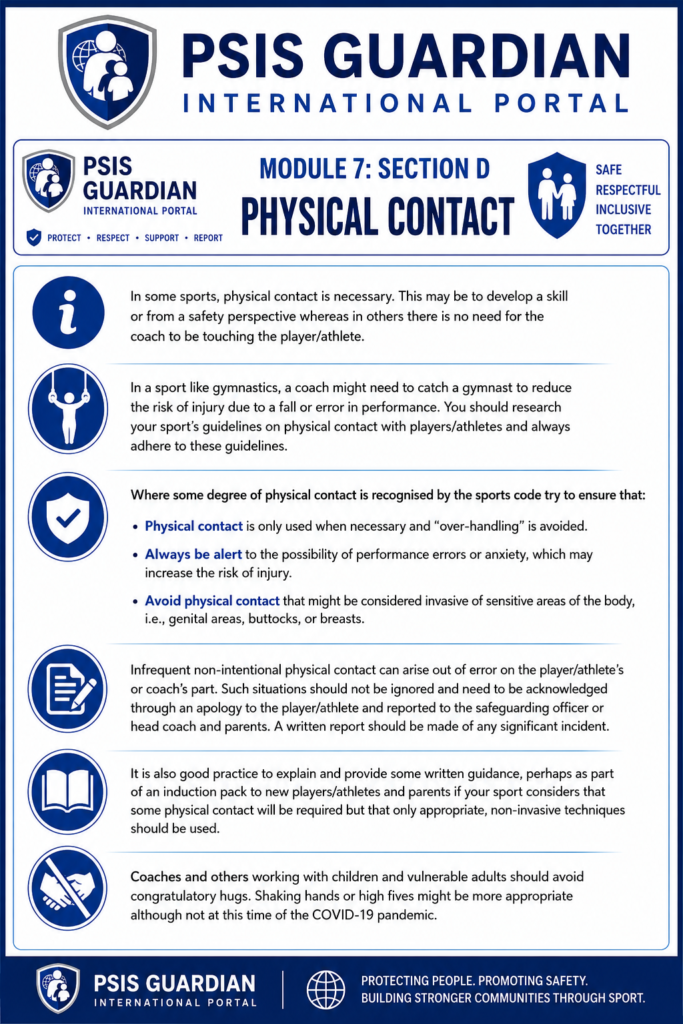
Module 7: Section E- FLEXIBILITY AND STRETCHING EXERCISES
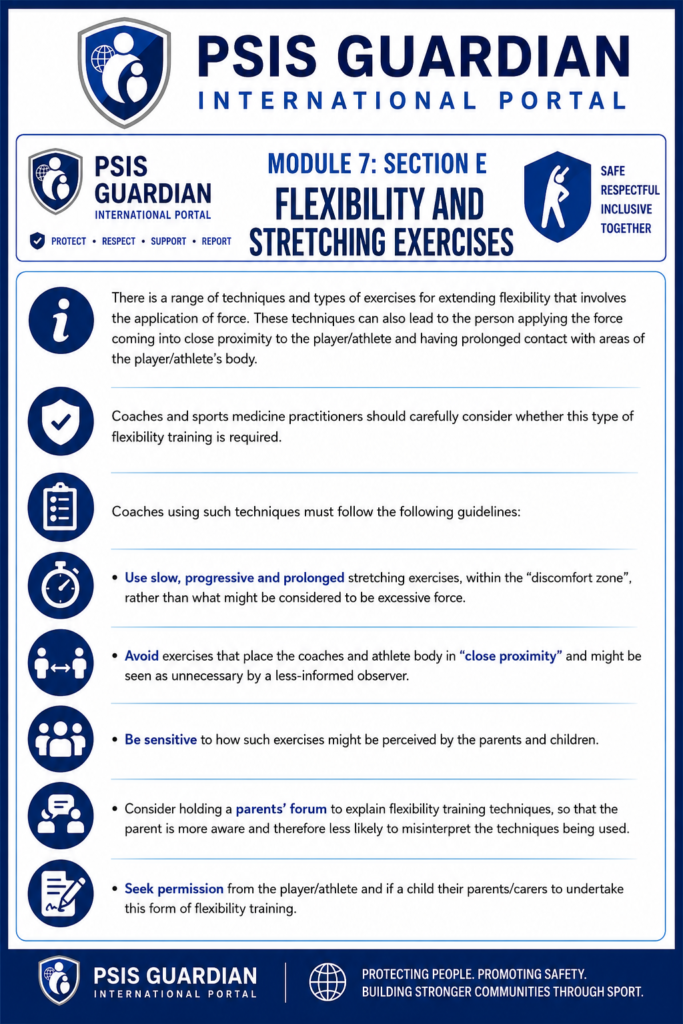
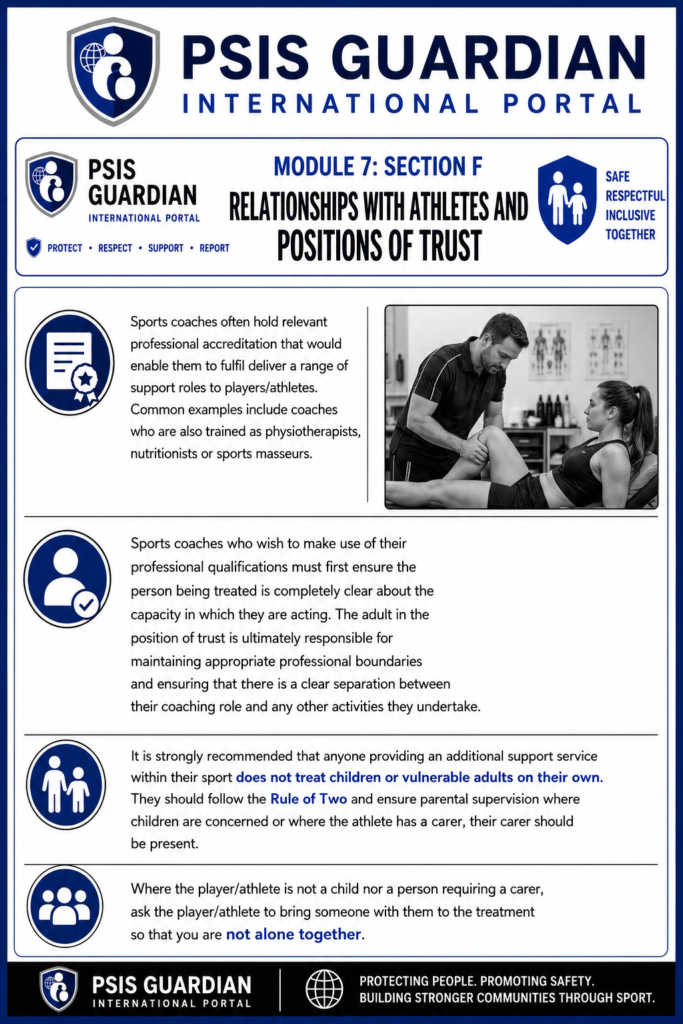
Module 7: Section F- RELATIONSHIPS WITH ATHLETES AND POSITIONS OF TRUST
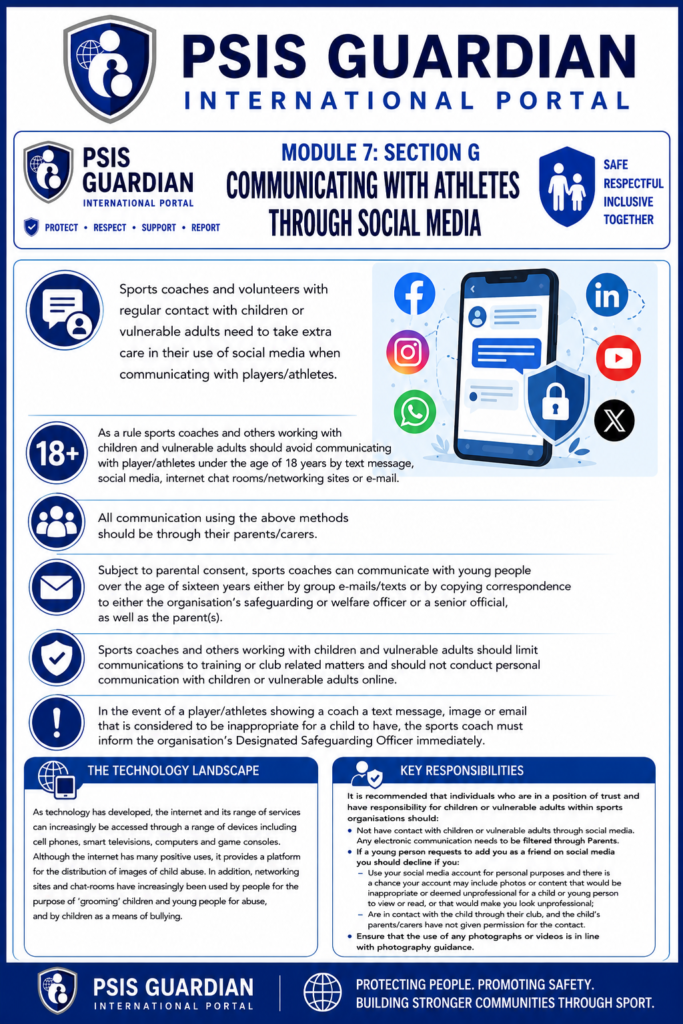
Module 7: Section G-COMMUNICATION WITH ATHLETES THROUGH SOCIAL MEDIA
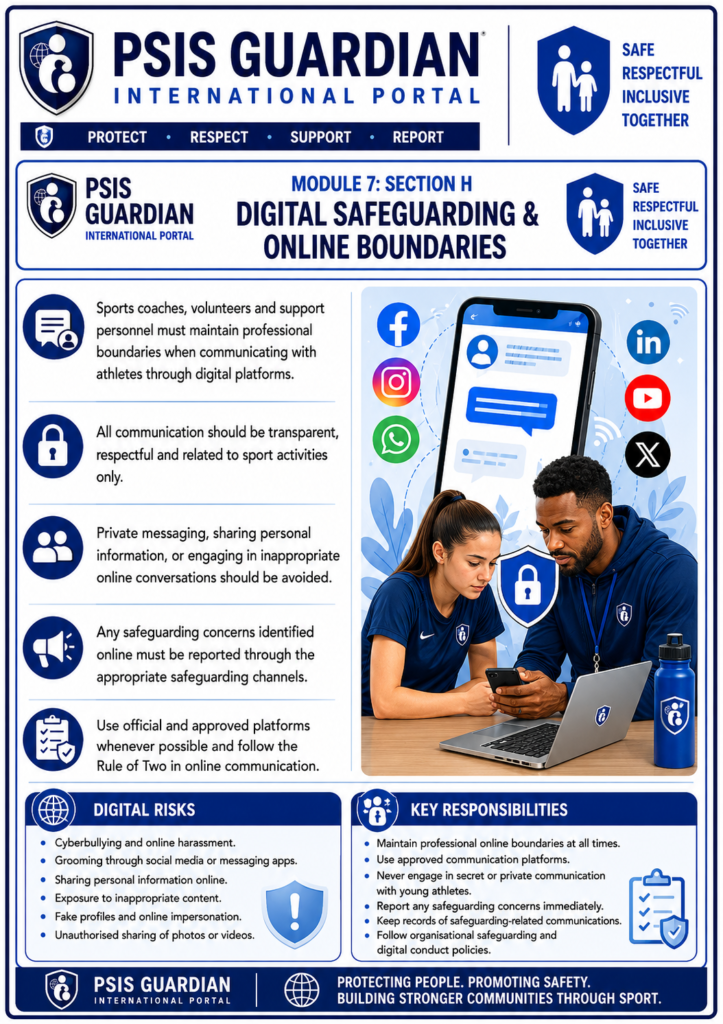
Module 7: Section H-DIGITAL SAFEGUARDING & ONLINE BOUNDARIES
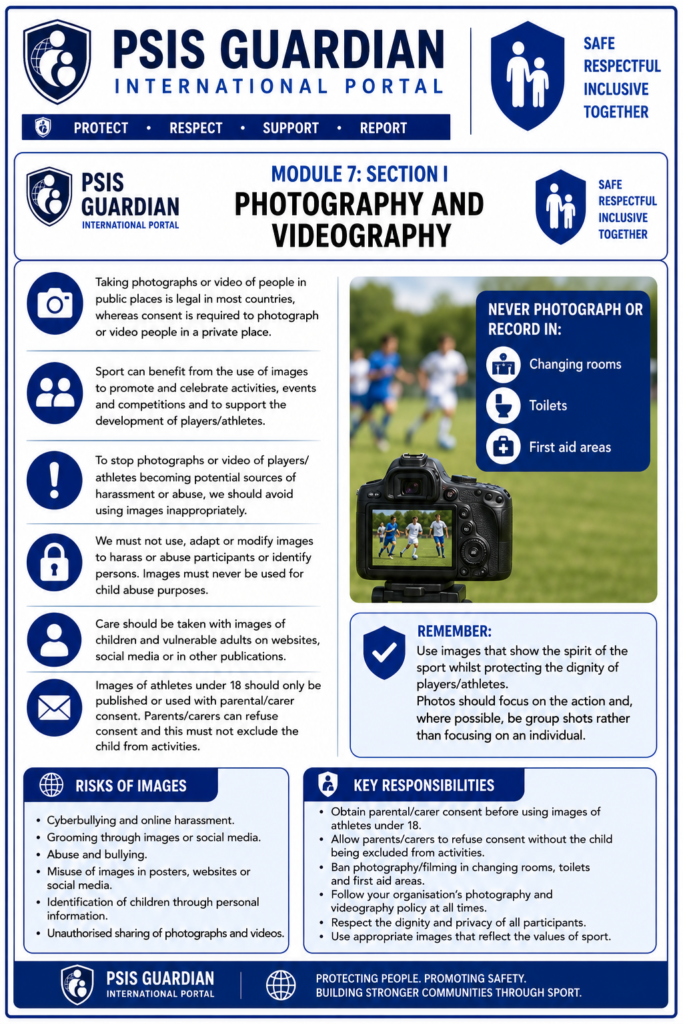
Module 7: Section I-PHOTOGRAPHY AND VIDEOGRAPHY
Welcome to the PSIS Guardian Safeguarding Awareness Training Programme
Available Training Videos
Short educational videos are provided to help participants understand safeguarding practices, safe sport environments and responsible leadership.
These videos are designed to support learning and reinforce the key safeguarding concepts covered throughout the PSIS Guardian Safeguarding Awareness Programme.
Module 1:What is Safeguarding?
Module 1- Section B: Children and Vulnerable Adults.
Module 2, Section A: Harassment.
Module 2, Section B: Abuse
Module 2, Section C: Poor Practice.
Module 2, Section D: Specific Forms and Settings of Abuse
Module 2: Section E – Effects of Harassment, Abuse and Poor Practice
Module 2 Section F Bullying
Module 2: Section G – Grooming
Module 2: Section H – Human Trafficking
Module 3, Section A: Understanding Who Harms Children
Module 3, Section B: Recognising the Signs of Abuse
Module 4, Section A: Dealing with a Disclosure
Module 4, Section B: Reporting and Recording Safeguarding Concerns.
Module 5, Section A: Confidentiality and Information Sharing
Module 5, Section B: Professional Boundaries and Code of Conduct
Module 6: Legal Responsibilities in Safeguarding
Module 6,Section A: Equality, Diversity and Inclusion in Safeguarding
Module 6: Section B – Protecting Vulnerable Groups and Preventing Discrimination
Module 7, Section A: Safe Sport Environments
Module 7, Section B: The Duty of Care
Module 7, Section C: Rule of Two
Module 7, Section D: Physical Contact
Module 7, Section E: Flexibility and Stretching Exercises
Module 7, Section F: Relationships with Athletes and Positions of Trust
Module 7, Section G: Communicating with Athletes Through Social Media
Module 7, Section H: Digital Safeguarding and Online Boundaries
Module 7, Section I: Photography and Videography
Module 7 Overview:
Section A – Safe Sport Environments
Section B – Duty of Care
Section C – Rule of Two
Section D – Physical Contact
Section E – Flexibility and Stretching Exercises
Section F – Relationships and Positions of Trust
Section G – Communicating Through Social Media
Section H – Reporting and Responding to Safeguarding Concerns
Section I – Photography and Videography
Case Studies
Case studies help participants understand real safeguarding situations and how to respond responsibly.
Examples may include: • Recognising emotional distress
- Gifts and favouritism
- Online vulnerability
- Rule of Two in practice
Assessment
Course Assessment
After reviewing the learning materials, participants will complete a multi-choice assessment to demonstrate their understanding of safeguarding principles.
- Gifts and favouritism
- Online vulnerability
- Rule of Two in practice