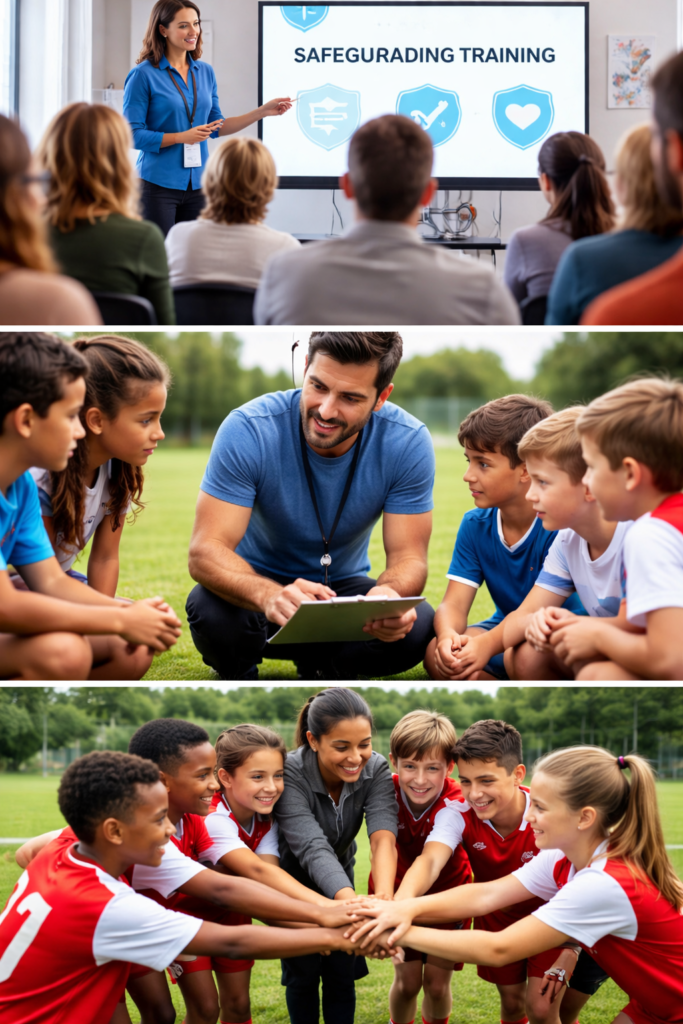
PSIS Guardian Safeguarding Courses
PSIS Guardian Portal provides safeguarding training designed for sports organisations, schools and community institutions.
Our courses help leaders, coaches and staff understand safeguarding responsibilities and create safe environments for children and young people.
Children and young people
Safeguarding Fundamentals
This course introduces the key principles of safeguarding and protection.
Topics covered:
Understanding safeguarding
Recognising risks and abuse
Reporting procedures
Responsibility of leaders
Safe Sport Environments
This course focuses on safeguarding practices in sports environments to ensure young athletes participate in safe and respectful settings.
Topics covered:
Athlete protection
Safe coaching practices
Risk awareness
Responsible leadership
The Rule of Two
The Rule of Two is a safeguarding principle designed to protect children and young people in sport and youth activities.
It means that no adult should be alone with a child or young athlete in a private situation. Whenever possible, two responsible adults should be present during training sessions, meetings, travel, or communication with young participants.
Why the Rule of Two is important
- Protects children and young people
- Creates transparency in activities
- Protects coaches and staff from misunderstandings
- Promotes safe sport environments
Examples of the Rule of Two - Two coaches present during training
- Meetings held in open or visible areas
- Parents or guardians included in communication
- No private one-to-one situations behind closed doors
Gifts and Favouritism
Giving gifts or showing favouritism to individual athletes can create unhealthy relationships and may lead to safeguarding concerns.
Coaches, teachers and staff must maintain professional boundaries and treat all participants fairly.
Good safeguarding practice
- Avoid giving personal gifts to individual athletes
- Do not show special treatment to one participant
- Keep relationships professional and transparent
- Follow organisational safeguarding policies
If a gift is given - It should be small and appropriate
- It should be given openly and with organisational approval
- Parents or guardians should be aware
This topic is important because many safeguarding cases start with favouritism or special attention.
Online Vulnerability of Children - Children and young people can be vulnerable in online environments. They may not always recognise risks or unsafe behaviour when communicating through digital platforms.
- Common online risks include:
- Contact with strangers online
- Pressure to share personal information or photos
- Online bullying or harassment
- Manipulation or grooming by adults
Good safeguarding practice: - Encourage open communication with parents or guardians
- Use safe and monitored communication platforms
- Avoid private one-to-one messaging with children
- Report any suspicious behaviour immediately
Human Trafficking Awareness
Human trafficking is the exploitation of people through coercion, deception, or abuse of power. Children and young people involved in sport or community activities may sometimes be vulnerable to exploitation.
Safeguarding training helps coaches, teachers and leaders recognise warning signs and take appropriate action to protect young people.
Warning signs may include: • Sudden changes in behaviour
Restricted freedom or control by others
Unusual travel or accommodation arrangements
- Fear of speaking openly
Safeguarding action includes: • Reporting concerns to safeguarding officers - Following organisational safeguarding procedures
- Ensuring safe supervision and protection of young participants
Ensuring safe supervision and protection of young participants
Integrity & Ethical Leadership
This course explores ethical leadership, transparency and accountability within organisations.
Topics covered:
Restricted freedom or control by others
Unusual travel or accommodation arrangements
Fear of speaking openly
Safeguarding action includes: • Reporting concerns to safeguarding officers
Following organisational safeguarding procedures
Ethical leadership principles
Respect and accountability
Professional boundaries
Building trust in organisations
Ethical decision making
Transparency
Organisational responsibility
Recognising and Responding to Safeguarding Concerns
This course helps participants recognise when children or young people may feel unsafe, scared or at risk, and how to respond appropriately.
Topics covered:
Recognising signs of distress

Listening to children and young people
Responding responsibly
Reporting safeguarding concerns
Legal Responsibility
Reporting to Authorities and Social Services

Legal Responsibility
Reporting to Authorities and Social Services
In safeguarding situations involving children or vulnerable individuals, concerns must be reported to the appropriate authorities.
This may include:
Relevant sports governing bodies
When a child may be at risk of harm, abuse, exploitation, trafficking, or neglect, Social Services have a legal responsibility to investigate and ensure the safety and welfare of the child.
All coaches, staff, volunteers, and officials involved in sport must understand their duty to report concerns immediately.
Protecting children is a shared responsibility between organisations, law enforcement, and Social Services.
“Abuse, exploitation, trafficking, harassment, and neglect are criminal offences and must be reported to the appropriate authorities. Safeguarding is both a moral duty and a legal obligation.”
Police or law enforcement
Social Services / Child Protection Services
Safeguarding officers within organisations
Certification
Participants who complete the course and pass the assessment will receive a PSIS Guardian Portal Certificate of Completion.
Enrollment
This page will allow people to register for the courses.